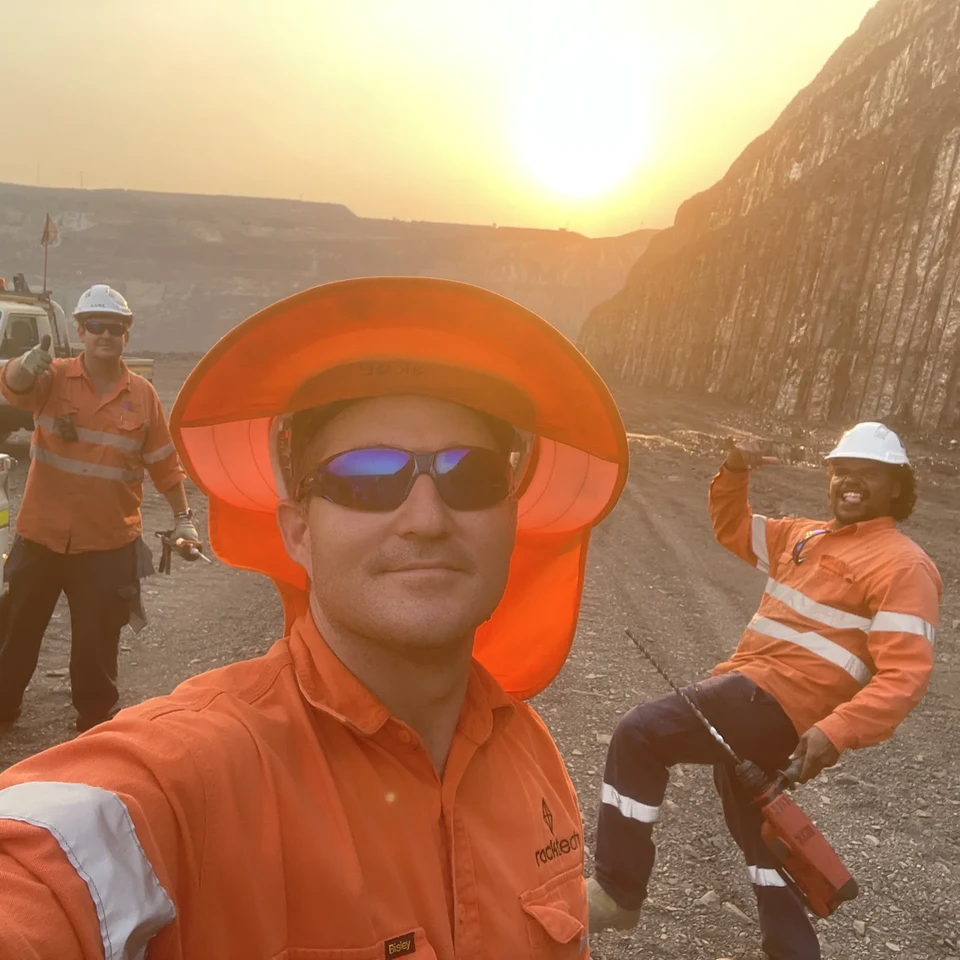
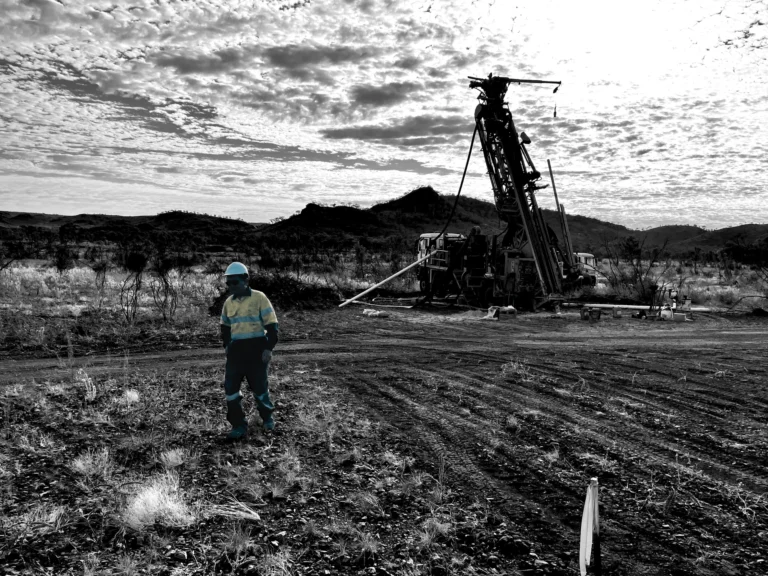
Remote work in mining is often sold as flexibility. On site, it is constraint.
Distance removes redundancy. Logistics, communications, fatigue, and weather stop being background noise and become primary controls. Decisions that are recoverable near town become permanent when access is limited.
Reality check: Remote work does not forgive weak systems. It exposes them.
Mobilisation is the job
In remote programs, mobilisation is not a prelude. It is part of production.
Flights, access roads, inductions, camp capacity, and freight windows determine when work starts and how it can sequence. A missed connection does not cost hours. It costs days.
Rock Force treats mobilisation as an operational system with owners, constraints, and contingencies defined before boots hit site.
Mobilisation state
Immediate effect
Downstream risk
Defined scope and contingencies
Predictable start-up
Work absorbs disruption
Ad-hoc mobilisation
Delayed commencement
Pressure-driven shortcuts
If mobilisation is sloppy, the rest of the program inherits that disorder.
Communications are a constraint, not a convenience
Remote sites rarely fail because communication is impossible. They fail because it is assumed to be available.
Satellite dropouts, bandwidth limits, and radio-only coverage compress decision-making. Long explanations fail. Ambiguity grows.
Rock Force designs decision authority assuming comms will degrade. Certain calls are owned on site. Others trigger escalation automatically.
Comms assumption
Decision outcome
Risk profile
Signal always available
Delayed or deferred decisions
Exposure during outages
Signal will degrade
Clear on-site authority
Work continues safely
Sample custody under distance
Distance tests discipline.
Samples move through vehicles, storage points, and people before reaching a lab. Each transfer is a failure opportunity.
Rock Force enforces simple, auditable chain-of-custody controls that survive long transport legs and delayed freight.
When sample integrity is questioned later, the work upstream is already compromised.
Systems that survive isolation and turnover
Remote work amplifies turnover.
People cycle in and out. Informal workarounds become invisible risks. Oral history decays fast.
Rock Force designs field systems that assume people will leave. Procedures, logs, and decisions are documented so the next crew can operate without memory transfer.
System type
Depends on
Failure mode
Person-dependent
Memory and goodwill
Breaks on rotation
System-dependent
Records and checks
Survives turnover
Decision latency and escalation
Every remote decision has a delay cost.
Waiting for approval can stall work. Acting without authority creates unmanaged risk. The balance point must be explicit.
Rock Force defines escalation thresholds before mobilisation. Some decisions are owned on site. Others escalate by rule, even if progress slows.
Remote work fails when this boundary is unclear.
What remote competence actually looks like
Remote work is not about resilience slogans or adventure framing.
It is about whether work continues safely when flights cancel, roads close, comms drop out, and relief crews are delayed.
Audit your last remote mobilisation. Review your comms assumptions. Check whether your field systems would survive a missed swing.
If they would not, the risk is already present. Distance just makes it visible.
Jakob HornJakob Horn is the Director of Rock Force, building and operating geology and geotechnical teams for remote and active mine sites. He works across operations and recruitment, holding standards on site and backing teams through full swings. His focus is reliability, clear communication, and delivery under real field conditions.